Every spring in Streetsboro, as the snowmelt reveals what winter did to our yards, phones at every local tree service start ringing. A big maple split down the center. A pine leaning toward the driveway. A dead ash dropping limbs near the property line. More often than not, the caller starts with a confession: "I was going to tackle it myself this weekend, but…"
That "but" usually means someone in the family talked them out of it, or they went down a YouTube rabbit hole and realized how much they did not know. After a couple of decades around tree work in Northeast Ohio, I have seen both outcomes: the homeowner who called a professional in time, and the one who tried to save money with DIY and wound up saving on nothing at all.
Streetsboro has a lot of mature trees, mixed housing stock, and weather that whips from ice to thunderstorms to summer drought. It is exactly the kind of place where tree removal looks simple from the ground and turns complicated the moment you leave it. That gap between appearance and reality is what makes tree removal in Streetsboro a bad choice for a casual weekend project.
This is not about scaring you into hiring a tree service. It is about understanding what is actually involved so you can make a choice with clear eyes, not optimism and a chainsaw.
The difference between cutting a tree and removing one
Almost anyone with a chainsaw, a ladder, and some patience can cut a small tree. Removing a tree is something else entirely. It is a controlled demolition, only you are working with a living, sometimes decaying structure that flexes, twists, and surprises you.
With a mature tree, especially the kinds you see in older parts of Streetsboro, the work is rarely a single cut and a clean fall. It involves reading the tree: how it grew, which side carries more weight, where the rot started, how the branches are loaded over a house or power lines. A small misjudgment in any of those can turn a routine job into a problem measured in thousands of dollars and a phone call to your insurance company.
Tree service crews treat every removal as a sequence of decisions, not just a physical task. They plan tie-in points for ropes, cut order for major limbs, drop zones on the ground, and escape paths if the tree or a branch moves unpredictably. A homeowner standing at the base of the trunk sees a big plant. A trained arborist sees leverage, tension, compression, and potential failure points.
When you think about "tree removal Streetsboro" as a search term, that is really what you are buying: not just muscle and equipment, but judgment. The physics do not care whether you meant well.
Streetsboro specific challenges that DIY often overlooks
Every Find out more town has its quirks. In Streetsboro, several factors combine to make tree removal more technical than it might look in a flat, open field.
First, there is the weather history. Our freeze-thaw cycles, late spring snow, and heavy summer storms create internal weaknesses you cannot see from the ground. I have been on jobs where a tree looked solid, then a climber made the first cut and the interior crumbled like cork. The homeowner had no way to know the trunk was hollow; it took a trained eye and sometimes sounding the trunk with a mallet to pick up on subtle clues.
Second, there is tree variety. Streetsboro yards hold a mix of older maples, ornamental pears, spruce and pine rows, and now a large number of dead or dying ash trees from the emerald ash borer. Dead ash in particular behaves dangerously. The wood becomes brittle, unpredictable, and prone to snapping under loads that a healthy tree would shrug off. We have a saying among crews: a dead ash is stronger than your rope and weaker than you expect, at the same time. DIYers often underestimate just how compromised that wood is.
Third, lot layout matters. Many of the developments around Streetsboro have shorter setbacks and narrower yards than older rural properties. That means trees are closer to houses, sheds, fences, pools, and neighbor properties. A tree that might be straightforward to fell on a spacious piece of land becomes a technical dismantling job when your drop zone is the size of a sedan.
Finally, there is soil and root behavior. Clay-heavy soils and wet spots, which are common in Portage County, lead to shallow rooting in certain species. A tree that looks upright can actually be partially uprooted beneath the surface. Climbing or rigging on a compromised root plate is a risk in itself. This is the sort of thing a local tree service in Streetsboro learns the hard way over years, then builds into their standard assessments.
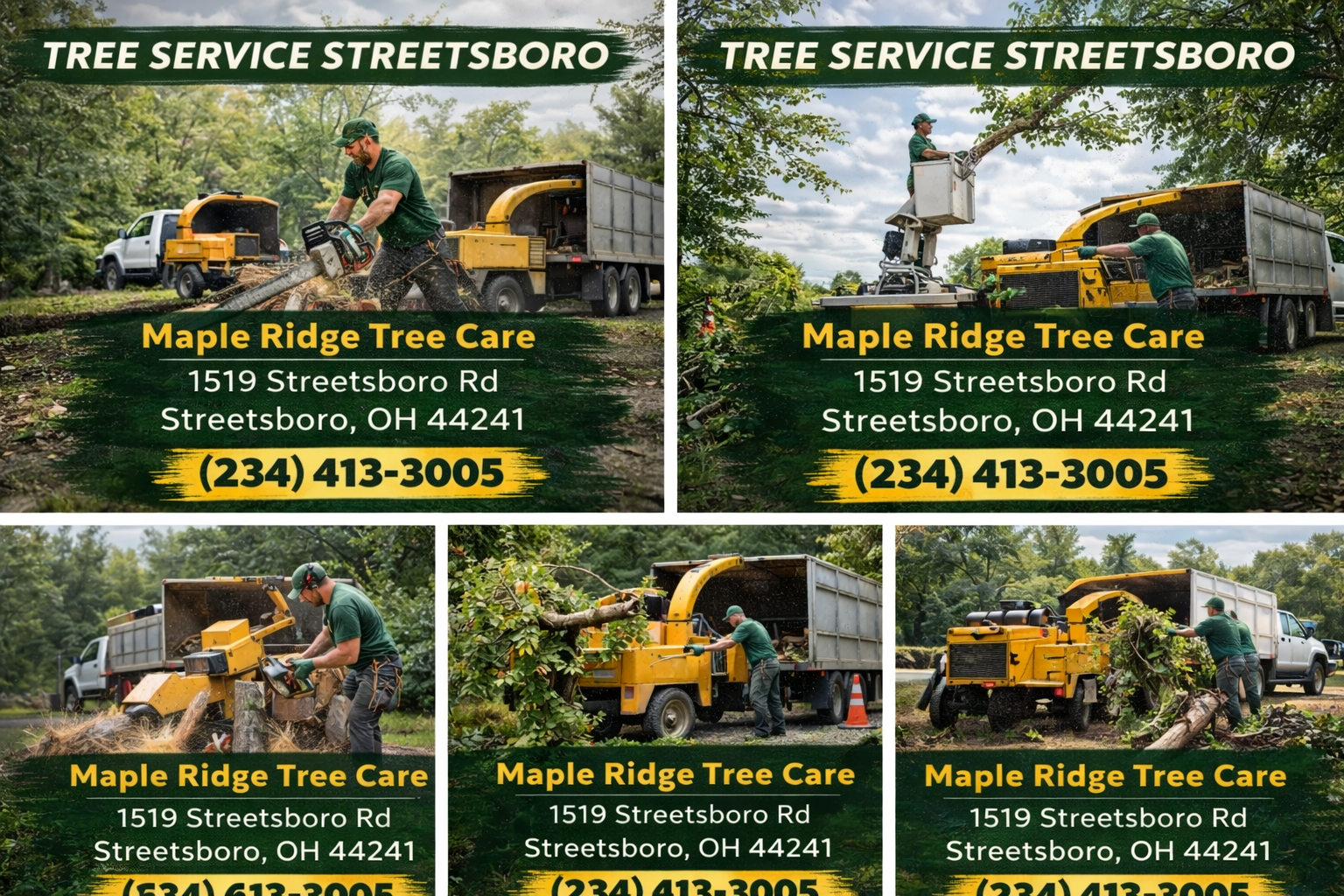
The tools are not the problem. Knowing how to use them is.
Many homeowners think, "I have a chainsaw. How hard can this be?" The issue is not the saw. It is what happens around it.
Professional tree crews bring gear that most DIYers do not own and would struggle to operate safely: climbing harnesses, helmets with face shields and hearing protection, rigging lines rated for specific loads, friction devices for lowering limbs, throw lines to set anchor points in tall trees, and sometimes cranes or bucket trucks.
Even with all that, they treat each cut with caution. A simple horizontal slice into a branch can release stored energy you did not know was there. Branches under tension can spring back and strike, barber chair a trunk, or roll unpredictably when they hit the ground. I have watched limbs shift in ways that would have knocked a person off a ladder or pinned them under a log if they were standing in the wrong spot.
Tree trimming looks more approachable, which is part of the problem. Someone feels comfortable doing minor tree trimming one year, then decides the next year that full removal is just a bigger version of the same thing. It is not. Removing a tree, especially near structures, moves into the territory where you are relying on specialized rigging skills, not just balance and a saw.
Tree service companies like Maple Ridge Tree Care spend a lot of time on internal training around this. How to tie specific knots that will not slip, how to assess whether a limb can be free-dropped or needs a controlled lower, how to judge the strength of an anchor branch before trusting a line and a human life to it. That knowledge does not come from a manual or a ten minute video. It comes from dozens of jobs, near misses, and shared lessons that do not show up on a hardware store poster.
Ladders, gravity, and the myth of "careful enough"
If there is one consistent red flag on a potential DIY removal, it is a homeowner pointing to a tall extension ladder and saying, "I will just climb up there and work my way down the tree."
Ladders and chainsaws are a bad combination. Throw in a little wind, a branch pushing against the ladder, uneven ground, or an unexpected kickback, and the room for error disappears. Most professional tree climbers avoid ladders altogether on removals. They ascend using rope systems that keep them tied in above their work, not balancing on something that can be knocked out from under them.
Even without a saw in hand, the forces at play surprise people. Cutting a limb that is propping a ladder can make the ladder shift. Cutting above shoulder height raises the saw close to your face. Trying to lean just a little farther for "one more cut" before climbing down is how people end up on the ground, or on a car roof, in a hurry.
I have spoken with homeowners after falls who said the same thing: "I thought I was being careful." They were, in their minds. Their definition of careful just did not match the level of risk they were stepping into. Professionals assume that something unexpected will happen, then they build their system so that when it does, the worst outcome is inconvenience, not a trip to the hospital.
If you find yourself saying, "I will be really careful," it is a sign that you are relying on luck more than process.
Hidden costs of a "cheap" DIY removal
On paper, DIY tree removal looks like a way to save money. You picture the quote from a tree service, compare it to a weekend of your own labor, maybe a rented chainsaw, and the math seems obvious.
That math often ignores several categories of cost.
Disposal is the first surprise. Streetsboro residents sometimes underestimate how much wood and brush a medium sized tree generates. It is one thing to drop the tree. It is another to cut and move every limb, trunk section, and pile of twigs. Hauling it yourself means multiple truck or trailer loads, dump fees or waiting for city brush pickup, and a lot of repetitive, heavy lifting.
Then there is equipment wear and tear. Consumer grade chainsaws are not built for full removals of dense hardwoods. Running a small saw at its limits for hours can burn out motors or lead to dangerous kickback if the chain dulls. Renting a bigger saw brings liability if anything goes wrong, and rental agreements rarely cover misuse.
Property damage sits in the background. I have seen DIY jobs where the homeowner "only" broke a fence section and flattened some shrubs. They still spent more than a basic professional removal would have cost. A limb that misses the target by three feet can crush the corner of a shed, crack a deck board, or break a window. Insurance companies ask hard questions when heavy damage comes from unlicensed work.
The biggest cost, of course, is injury. A twisted knee on uneven ground, a deep cut, or a fall from even a modest height has financial and physical consequences that dwarf the cost of calling a tree service in the first place. Hospital visits, time off work, rehab: none of that shows up in the optimistic DIY estimate.
When you phrase it as "tree service Streetsboro cost vs my weekend," ask yourself if you are including everything that might actually be on the bill.
Legal and utility considerations in Streetsboro
Tree removal does not exist in a vacuum. In a place like Streetsboro, there are ordinances, neighbor rights, and utility rules that come into play.
Property lines matter. If a trunk sits on or near the boundary, removing it without clear agreement can lead to disputes. Branches that cross into a neighbor yard create shared interest in the tree, and more than one homeowner has cut a tree on "their side" and sparked a fight that lasted longer than the stump.
Then there are easements and rights of way. Trees near sidewalks, drainage ditches, or roads may fall under additional regulations. Removing a tree in those areas without documentation can create headaches later, especially if a problem develops with heaving sidewalks or erosion and the city starts asking questions.
Utility lines are an entire category on their own. Any tree or large limb near power lines should trigger immediate caution. Even if you feel you can drop branches away from the lines, unexpected swings or bounces happen. Contact with lines can be fatal, and even near misses can cause outages and expensive damage. Utility companies in Northeast Ohio have specific rules about who is allowed to work within certain distances of their lines.
Professional crews in Streetsboro deal with these constraints constantly. A reputable tree service knows when to coordinate with the utility, when a crane is warranted, and when a bucket truck is safer than sending a climber near energized lines. Homeowners typically do not have that framework.
If a job description includes words like "close to the wires" or "right on the property line," that alone is a good reason to step back from DIY.
How professionals break down a removal
When you watch a seasoned crew remove a tree, the pace might look almost casual. That pace reflects planning, not lack of difficulty.
Before the first cut, they walk the site. They look at lean, crown shape, deadwood, cavities, and fungus at the base. They examine nearby structures and pick drop zones. They identify potential hazards: bees, hornet nests, brittle dead limbs, or vines that can tangle ropes. They discuss the sequence: which branches go first, how to avoid swinging limbs into a house, where to park equipment for the best angles.
Then they assign roles. One person in the tree, one or more on the ground, one operating lowering devices, sometimes another spotting for traffic or pedestrians in tight neighborhoods. That division of labor means the climber can focus on precision cuts while the ground crew manages ropes and clear communication.
On technical removals, especially near roofs or glass, they use rigging to lower sections instead of free dropping them. This controlled lowering is much slower than just cutting and letting gravity do the rest, but it prevents damage. It also allows them to work in yards with tight clearances where a homeowner might see no way to remove a tree without destroying half the landscaping.
Even stump removal carries complexity. Grinding to the right depth, avoiding underground utilities, and preventing sinkholes later requires more attention than simply "knocking it down." When you search for "tree removal Streetsboro" and see a company offering full service from crown to stump, that continuity of process is part of what you are getting.
When DIY might be reasonable
There are limited scenarios where a careful homeowner with some equipment and physical ability can handle a removal safely.
If you are looking at a small tree, shorter than your own roofline, in an open area with plenty of room in all directions, and the trunk shows no sign of rot, splitting, or major lean, then basic felling might be realistic. In those cases, you still need to understand directional cuts, escape routes, and how wind can push a tree off course.
Light tree trimming also remains within reach of many homeowners. Removing a few low branches from a young tree, or cutting back small limbs that are not under heavy tension, is more akin to pruning than technical removal. Even then, using sharp tools, avoiding overhead work on ladders, and respecting the weights involved matters.
The line between manageable and risky is usually crossed when a tree:
- Is taller than nearby structures or power lines Has visible decay, fungus, or deadwood high in the crown Leans significantly or has lifted roots on one side Stands within falling distance of a house, garage, or fence Might require climbing or cutting above shoulder height
If two or more of those apply, a professional tree service is not a luxury. It is the sane option.
What to look for in a Streetsboro tree service
Once you decide not to turn tree removal into a weekend project, the next step is finding the right company. Not every truck with a chainsaw logo offers the same level of safety, skill, or accountability.
Start with proof of insurance and proper registration. Responsible companies carry liability insurance and worker’s compensation that protect both you and their crews if something goes wrong. Ask to see documentation, not just verbal assurances.
Local experience matters more than people think. A company like tree service Maple Ridge Tree Care, which has worked in and around Streetsboro for years, knows the common tree species, typical soil conditions, and what local storms do to various types of trees. They also understand local ordinances and how to handle work near utilities and property lines.
Walk through the proposed work with them. A good estimator will explain how they intend to bring the tree down, whether they plan to climb, use a bucket truck, or bring in a crane. They should talk about protecting your yard, where they will place brush piles, and how they will handle cleanup.
Price is a factor, but if one quote is dramatically lower than the others, ask why. It may indicate shortcuts on safety, insurance, or disposal. A thoughtful estimate reflects time spent planning, not just rough guessing.
Finally, pay attention to communication. From the first phone call to how they answer your questions on site, you are getting a preview of how the actual workday will go. Crews that take the time to explain their plan usually take equal care with the actual removal.
A practical way to decide: DIY or hire?
If you are on the fence, it helps to run through a simple mental checklist before touching a saw.
Ask yourself whether the tree could hit any structure, fence, vehicle, or line if it falls in an unintended direction. Consider whether you would need a ladder, climb into the tree, or work above your shoulder line to remove branches. Think about what you would do if the tree started to fall the wrong way, or if the bar of your saw got pinched in the cut. Picture the cleanup and disposal: do you have a plan for all that material?
Then consider your own experience. Have you felled trees before, or handled even basic tree trimming safely over multiple seasons? Do you know how to sharpen and maintain a saw, identify kickback zones, and recognize bar pinch? If any of those questions makes you pause, that pause is meaningful.
One practical approach is simple. Use your DIY energy on things below your feet: planting, mulching, mowing, light pruning. When something requires leaving the ground, rigging ropes, or putting heavy wood in motion over your head, that is when a specialist earns their fee. In a town like Streetsboro, with its mature trees, mixed lot sizes, and unpredictable weather history, that boundary line is not theoretical. It is what keeps a weekend project from turning into an emergency call.
Tree removal is not mysterious, but it is unforgiving. Professionals turn it into a routine by treating every job with respect. If your plan for the next big tree in your yard consists mostly of optimism and a borrowed chainsaw, that is a good sign to stop, step back, and let someone who does this work every week take over.